SPSS 17 is very similar in most ways to SPSS 16, only with far fewer bugs and with some key additions. It’s one of the more comprehensive updates to the program, and is essentially a required upgrade from 16 if only to squash the bugs. (Note: we have also used SPSS 27 for the Mac, which has basically the same pros and cons, but is very slow.)
The various bugs we mentioned are pretty much gone now (we have not tested the update checker or dragging an Excel file onto the spreadsheet view, to be fair). The program is still fairly slow, which is, I believe, entirely due to the speed of rendering results, rather than speed of calculation. SPSS 17 deals with sluggishness on PowerPC machines by requiring an Intel processor.
SPSS still does not have keyboard commands to switch through the various windows. You can shut off the case summary, but you have to do it at the beginning of each session. The mainly-useless Help menu still runs through every single menu when clicked, a major slowdown; SPSS believes the problem is in Apple’s Java implementation, which is likely since Apple wants Help to be used to quickly spot menu items, but it's still a pain for which a workaround would be nice.
Again, you can change the size of dialogue boxes, so that if you want to see longer variable names in, say, Recode, you can - but you can't change the size of any particular element, resulting in some serious stretching at times.
Spss For Mac Student Version Software Pro Paint for Mac v.3.35 Paint for Mac Pro version is the realistic digital Mac paint program that is used to edit image, vector graphic design, free-form transformation, add filters, crop, alpha channel edit and more to paint on Mac. SPSS 17.0 CD for MAC on Amazon.com.FREE. shipping on qualifying offers. SPSS 17.0 CD for MAC. Mac OS X 10.4 or higher Intel Processor 512 MB RAM (1GB Recommended) 825 MB disk space SPSS 17.0 for Macintosh Licensing Information The Single User Authorization Code can be used to install SPSS on one computer. Licenses are tied to your computer with a lock code. If you replace your computer.
SPSS 17 continues 16’s limitations on reading Windows and old Mac output and continues to read older data and syntax files with no problem; more impressively, older versions of SPSS can easily read SPSS 17’s files, even though SPSS 16 and 17 have support for long variable names.
Cool new additions are a codebook procedure, which records all sorts of information about the data file; an improved syntax editor with autocompletion of common commands, code coloring, and instant reporting of errors in the syntax window; and spell checking of text strings in the data file (especially handy now that strings can be well over 256 characters — you can now use SPSS to handle qualitative survey data). A new export-to-Office feature provides more control over the output, too.
Statistical modifications to the base program include nearest neighbor analysis; a median function and lead function to COMPUTE and lead to IF; aggressive versus conservative rounding in COMPUTE; a graph conversion utility; more multithreaded algorithms for those with multi-core (or multiple) processors (all Intel Mac users); and far better graphing and visualization capabilities with the new Graphboard.
As for optional modules, there is multiple imputation for missing values (Missing Values module), a process which is fairly painstaking and requires thought, but can be absolutely invaluable. Categories has improved categorical regression predictions. A new module, EZ RFM, provides recency, frequency, and monetary analysis; and enterprise users and statistical programmers will find all sorts of new additions.
As a side note, if you need to read SPSS “SPV” output files from relatively recent versions, you don’t need SPSS or even the company’s slow, buggy SmartViewer. You can open them in the free PSPP—very quickly indeed.
SPSS is one of the big statistical dogs of business and science; in particular SPSS' focus on business makes it relatively easy for the beginner, whether they plan to use it for scientific analysis or market research. Unfortunately, after its first promising version (which leapfrogged the old SPSS/PC), the Mac was relegated to second class or worse at SPSS; not until recently did the company start having MacKiev work on usable ports of the Windows versions. Even more recently, SPSS chose to take non-Windows platforms much more seriously, setting up a core statistics engine which is addressed by Java front end. This setup lets SPSS customize the front end for each platform while offering similar features across the board, without some of the limitations (particularly the time delays) of the past.
SPSS is serious, industrial-strength software; though it can be used through a familiar interface, with a spreadsheet view of the data and dropdown menus to run analyses, real power users eschew these and go for the built-in syntax language. SPSS has menu access to most or all commands, batch-language and interactive-command control, the ability to click a button and have a menu command appear in your batch file (so you will know how to write it in the future), and separate windows for syntax, data, and output. You can assign labels to values (1='Strongly Agree') and to variables (DOD1942 = 'Department of Defense Document 1942 references within this file').
Mac versions still have some interchange issues with Windows versions; Mac support is hard to find on the SPSS site; and there appear to be some Mac-specific bugs. On the lighter side, the current version comes with regression included, instead of being part of the Advanced Models package; but the tables facilities are still an option, as are time-series and numerous other statistics. Also to SPSS’ credit, the Mac version puts the menu at the top of the screen, has standard open/save dialogues with bookmarks on the left, and other user interface conventions of the Mac world.
The price remains very high for individual commercial users, and on top of the steep cost for the base package, many users will need extra modules, each of which costs about as much as a low-end version of Stata – and SPSS charges for module upgrades, too. However, academic prices are substantially discounted even for single users; there are dramatically discounted “graduate packs” and 'starter packs' good for four years; and academic site licenses which can greatly lower the price if you’re at an institution that buys many copies.
Stata’s full version is usually priced well below SPSS’ base package; but Stata has some drawbacks, including much lower ease of use, lack of “camera ready copy” — such as it is in SPSS — and some missing features, such as an easy way to do stepwise regression; and the spreadsheet view is lacking in comparison with SPSS. Stata does have a vibrant user community, but then, so does SPSS; both allow the use of external algorithsm, in SPSS’ case accepting both Python and R. To use them, you have to install the free Programmability extension.
One handy feature of SPSS is a sort of variable spreadsheet, which makes it easy to find and manipulate each variable. The columns shown below can be widened or narrowed as needed; and some items (such as value labels and missing values) can be copied from one variable and pasted to others. One can also change variable types here (indeed, this is the only place for doing that easily); but it's easier to change formatting (width, decimals, and columns) from syntax. Likewise, missing values, value labels, and variable labels can all be set either way, but syntax is easier.
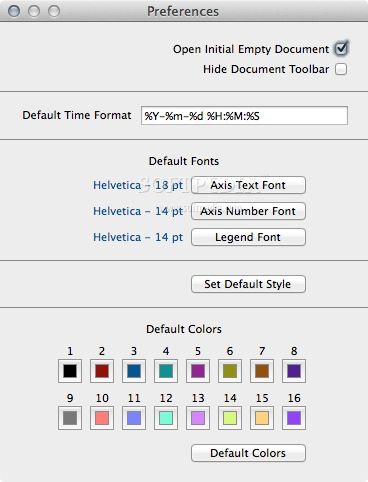
A new, and surprisingly handy, feature is the ability to have more than one dataset open at a time.
The “measure” column is new, and lets one declare the type of variable, which can be handy in the variable selection views (shown later). Variable names can be longer than 8 characters now but spaces and many special characters are still not allowed; fortunately variable labels are also available.
New users don't have to learn the syntax immediately; they can play around in the menus and submenus. Sometimes it’s a little awkward — in the example below, poorly chosen variable labels (automatically added by Perseus SurveySolutions) overfill their space, and the components of the box cannot be resized. Instead, as you move the mouse over, the full name floats over, after a substantial delay; this feature tends to get in the way more than anything else. The new use of icons is handy, though — you can quickly see which variables are appropriate in a particular analysis, if you took the time to mark them correctly. Even if you didn't, you can see the string variables easily.
For the average SPSS user, who will use a relatively small number of procedures repeatedly, the Paste button is invaluable. Instead of going to the manual immediately, the user can set all the options in this and the sub-windows, and then click on Paste. The command will then appear in the syntax window, to be re-used later, perhaps with different settings, or perhaps just with different variables. This is the easiest way to learn the syntax (though it helps to have the manual as well, to see what each setting does, and in case there are syntax commands not available through the GUI.)
As with prior versions, as you can easily slice, dice, and weight data, and pop out scatterplots using the built-in menus, SPSS automatically records your syntax into a “journal,” which you can later modify to quickly run lots of analyses very quickly. We recommend you use the syntax guide (provided on CD, or at extra cost in book form) and type your commands as often as you can, instead of using the menus. Using SPSS becomes much, much faster that way, especially if you tend to use powerful tools such as 'temp/select if' and 'do if' commands for quickly selecting one or two groups. Writing little programs in the syntax mode can save a great deal of time, and separates professional programs like SPSS from software which fills the needs of more casual reseachers. (The free, open-source R projectonly uses syntax.)
By typing in commands and then running them as a batch, the researcher can both take advantage of commands that don't work well as menus - such as temporary / select if - and save frequently used routines. For example, when running a linkage analysis to link employee survey data to customer or financial outcomes, I tend to run a number of regressions. It's far faster for me to type these commands in than to repeatedly trek through the menus. Likewise, if I just want to see how employees in Kansas answered a given question, I can either go through the menus, select just employees in Kansas, and select a frequency count; or I can type...
TEMP.
SELECT IF LOCATION=4.
FREQ /VAR=Q4.
Though it takes some time to learn the commands, most people tend to use the same commands over and over again. Using syntax can also save a lot of time for people who frequently use different options than the defaults. While the menus aren't too clumsy, simply typing the commands is a major timesaver.
SPSS has done a wonderful job of maintaining the syntax through all Mac and Windows versions, so that files written for older versions work without a hitch. The data format is also compatible without conversion, across versions and platforms, making it easy to share data and scripts with Windows people or users of older Macs. Data is stored in a highly compressed format, in a break from Microsoft norms of oversized files (but matching SPSS' mainframe heritage). There can be problems with sharing output files.
SPSS 16 seems less “touchy” than prior versions, though it is very sensitive to license issues. Activation is required, and we had times when it stuttered and told us there were licensing issues. That said, the program starts up quickly; selecting a data file is easy, though getting a new Excel or other data file in requires going into Open and then adjusting the file filter (otherwise it only opens SPSS’ own tightly-compressed .sav files).
Numerous icons provide little ease-of-use features, including variable sets, a lit of variables, a Python scripting facility, an easily used “common commands” button, and an export button which allows the output to be exported directly to Word, Excel, PDF, html, plain-text, or (just for graphics) various graphics formats like JPG and GIF.
A new “identify duplicate cases” feature will be quite a boon to survey users; it’s a fairly flexible tool, too. The menus and toolbars can finally be customized, which can help speed up the daily routine. A “visual binning” tool makes it easier to sort out the variables into categories (scale, ordinal, etc.), and another tool allows for date identification, another very useful new feature; the multiple response categories tool was already available and handy for surveyors. Insane people can change the user interface from “Macintosh” to “SPSS standard” so they can experience the joys of seeing three different menus, one on each window, and each one containing different commands.
It used to be that SPSS would run its analyses, then put them into the SPSS Viewer window (there are three windows at most — Viewer, where output goes; Syntax, where you program or run commands one at a time; and the variables/data spreadsheet), but now SPSS sets up the output window, putting in placeholders until it builds the tables. It’s just a little weird but no better or worse. Speed seems about the same — the calculations are lightning fast, and the graphics take a while. Every analysis seems to get a little header that we usually delete, telling the valid and missing sample sizes in summary form, even if they're in the regular output. We thought this could not be shut off, but the people from SPSS corrected us — you can shut it off, using the Output Management System. Indeed, the output management options are fairly extensive and allowed us to shut off repetition of commands, warnings, and other items — it’s a real improvement.
Copying and pasting is easy when it works; copied tables are pasted as ordinary text in programs like Dreamweaver, as tables in Word, and as data in appropriate cells in Word. If you want to retain the formatting, paste into Word; if you want to manipulate the results, Excel. Some larger output tables simply would not be copied at all, but you can save the output window and get at it that way. This is a real improvement over the prior version, which required us to paste into BBEdit before pasting into Word. On the darker side, we weren’t able to copy multiple output tables at once, which would have saved time. Users who want to customize the output will still be frustrated.
Charting is far better than in the past; though creating charts is a fairly clunky process in some ways, charts come out with sensible, clear formatting, are incredibly editable, and provide numerous options for scientists, statisticians, quality folk, and ordinary people. What’s more, the system pumps out the syntax whether you asked for it or not, so you can make minor changes manually without going through it. A test with fake data is:
Pivoting trays make it easy to change the way tables are printed; rows can become columns, for example, and layers can be made into rows or columns very easily. Anything can be switched to another place. Only a few commands (including REPORTS and LIST CASES) still produce old-fashioned, space-formatted, typewriter-font output. Since the REPORTS command is very useful, we hope they get around to converting all the commands to clean, tab-delimited output.
Charts, like tables, can be customized, and various formatting options can be saved as a chart style. The ability to save chart formats and to specify some options in syntax helps.
SPSS 11, like prior versions, also reads tab-delimited and fixed-format ASCII text and Excel files. Output files can be saved as html for posting on the Web. SPSS also sells programs which allow other people to view the results and delve deeper into the data. Dividing and subdividing data sets is fairly easy with commands such as Split File and extensive reporting features. Split File lets you sort results by a variable (or several variables) - for example, running any test or description separately on each location in a survey, using a single command. This can be a real time-saver.
New for SPSS is a very useful feature: string variables beyond 256 characters, allowing for easier use with survey data.
The optional and very handy Reports module produces output with tab-delimited tables , but it’s still only camera-ready if you’re not very particular. The Reports module can save a great deal of time when, for example, analyzing survey data. Most people will probably export (usually via copy and paste) SPSS tables and charts to other programs for publication.
SPSS 16 for Mac bugs and shortfalls
Bertolt Meyer, in his weblog, pointed to numerous SPSS 16 bugs, which the SPSS people claim have been fixed in 16.01 and 16.02. We found that value labels were converted into nonsense; and trying to run a large block of syntax created in text-editor BBEdit - all in U.S. English - resulted in the curious message, “Text value unmappable in the current server local” (and no pasting). Likewise, saving the syntax file gave us 'Text will be lost when the file is converted to the local encoding. Save anyway?” (BBEdit is not an SPSS product, but ideally every program should work with every other program.)
Here are some more issues that persist in 16.0.2:
- Using the built-in update checker, we were told to get the 16.01 patch. When we followed the URL to get it, we found only patches for Windows. This continued for weeks before SPSS fixed it. Now, when we check for updates, it incorrectly tells us we're at version 16.0.0 and tells us to visit a URL that is not helpfully set up in link form.
- Dragging an Excel file onto the spreadsheet view gave us a 'file not recognized' error, though it opened if we went through the process of File>Open, change-type-to-Excel, find-on-drive.
- Simple processes like running frequencies of a 2,000 record file can be very slow - e.g. around ten seconds to do six variables, none of which are particularly lengthy. Operations like this were almost instantaneous in past versions.
There are reportedly also bugs regarding changes not being recorded when large files are saved.
This is not a bug per se, but after all these years, one would think that SPSS would make it easy to call up the data, dictionary, and output windows by using keyboard commands, at least when there is just one of each. Another annoying non-bug is the unavoidable printing of a case summary each time you do something - there’s just no way to shut if off.
A new oddity is running through all its commands (if the status window is to be believed) each and every time the mainly-useless Help menu is clicked. This continues after the 16.0.2 update.
You can now change the size of dialogue boxes, so that if you want to see longer variable names in, say, Recode, you can - but you can't change the size of any particular element, resulting in some serious stretching at times.
Michael Karcher noted that SPSS 16 cannot read old .spo (output) files from either platform; we were able to verify this (the Windows version also cannot read spo files, but Windows users get a free reader for older versions; Mac users do not). SPSS 16 does read old data files from as far back as SPSS 10, and probably earlier, without issues, and old syntax files are no problem.
SPSS 16 is sluggish on any PowerPC machine, including the speedy G5; SPSS appears to run around twice as fast on an Intel laptop as on a faster G5 workstation. On a Mac Pro, the user interface ran fairly nicely, though we have yet to compare it to SPSS 4.0 on an 8 MHz Mac Plus; however, at times calculations were surprisingly sluggish, including simple frequencies and crosstabs.
One reader wrote in: “I guess it is also fair to mention that given all of the SPSS patch notifications I have been getting for the past year from SPSS regarding data that doesn't save and changes that go unrecorded in large files, I have really lost a lot of faith in the new version.” [SPSS has had a 16.01 patch for at least two weeks for Windows but did not even mention the Mac version on their upgrade site, as of April 8, 2008. By the end of April, the Mac patches, including 16.02, were posted.]
Speed did not change when we added Java 6 to our system.
As a final note, many of these problems may be resolved in SPSS 17, which may not be a satisfactory solution for those who have to pay for their updates — but SPSS is “coming soon,” so we’d suggest waiting for its release if you’re on the verge of buying.
Summary
SPSS is sold as a base program with optional modules, all of which are available for the Mac. Between the base program and the modules, a huge number of analyses, tests, and statistics can be generated, most of them with ease. The company's Web site provides details on what each module does, an important consideration before buying. (When upgrading, the user must pay for upgrades on each module they use as well as on the base program). Some specialized statistics, however, can only be generated using non-SPSS software which is sold in other packages by SPSS (for example, a new program for dealing with very small samples).
Given the breadth of SPSS, it is nearly impossible to go into any depth on its statistical features. However, we can generally say that its statistical range is comprehensive, and that it becomes easier to use as one gets used to the syntax. The program works well with Excel, and is flexible in many ways.
The latest SPSS reinforced our conclusion that Stata is for scientists and statisticians – people who work the numbers for their own use, and only rarely take numbers out of the program for publication; but who need an additional level of flexibility, to the point of being able to program in their own specific routines. Getting Stata to do a new (to the user) procedure could be a rough task, with a steep learning curve and many alternative ways of doing things. These problems have to be weighed against speed, an exceedingly responsive tech support group, better pricing, and a historical commitment to cross-platform software.
Unfortunately, SPSS’ ease of use is severely marred by a feeling that the current version was only briefly beta-tested. That said, the numbers are probably as accurate as ever; an SPSS engineer assured us that while the user interface was new, the calculations were handled by the same engines used in the past, which can ram through incredible numbers of operations with great accuracy and speed (even if the output window draws the results slowly).
In the past, we generally believed the price of SPSS was well worth the ease of use — time is money, and spending days figuring out how to get basic features to operate quickly stops paying off. There is a penalty to pay for the Java user interface, at least for the moment; users of Mac Minis and older machines (particularly otherwise-demon-fast G5s) may be disappointed with some lag in the user interface. However, the program is easier to use and much, much more reliable than recent Mac versions, the numbers are (SPSS assures us) very accurate, and it’s still far faster to use even a sluggish SPSS than a fast Stata if you rely on the graphical user interface. SPSS is still the big dog of Macintosh statistical software.
Books by MacStats maintainer David Zatz • MacStats created in 1996 by Dr. Joel West; edited since 2005 by Dr. David Zatz of Toolpack Consulting. Copyright © 2005-2020 Zatz LLC. All rights reserved. Contact us.
Introductory note: SmartReader / SmartViewer
SPSS generally runs slowly on a Mac, compared with running on Windows. It should have all the capabilities of the Windows version, though... save for one, and that’s for Mac users who need to read SPSS SPV output files without a licensed copy. There, SPSS SmartReader (or SmartViewer) has not been updated past version 24 for the Mac, though it is available for Windows and Linux users up to version 27.
Even if you can download and run SmartViewer or SmartReader 24, it is painfully slow even on a new, modern computer, such as an i7 Mini 8,1 with 16 GB of RAM. Expect to wait ten seconds if you are foolish enough to change any preferences. Launching takes some time and once launched, you then have to manually open the file even if you opened SmartViewer by double-clicking on an output file. Try dragging it into the (running) SmartViewer.
Finding SmartReader is hard, too; it doesn't come with SPSS, and it's hard to find on the IBM web site (don't try searching, that just takes you to a page full of coding community events). It also requires you to log into IBM, creating an IBM ID if needed. Here is the current SmartReader link. Here is a link to the place to get the current SmartReader link. (IBM has several obsolete links to it on their web site.)
Update: Don’t bother with SmartReader. Download PSPP, which comes in at around 1/3 the size. It can open SPV files more quickly and just as accurately as SmartReader, and will do so more consistently (in that it will actually open them repeatedly rather than freezing after the first two files).
The following review is for SPSS itself
SPSS, Inc. competes with SAS for dominance in the big leagues of statistics software. Unlike SAS, SPSS makes its flagship software for Macs and Linux as well as Windows, using a core statistics engine addressed by a Java-based front end. This lets SPSS customize the front end for each platform, and makes the software somewhat more future-proof than its past practice of outsourcing ports; but it does seem to impact the speed. What's more, the open/save dialogue boxes are a nightmare of poor programming.
To reduce confusion about the many software products produced by SPSS the company, and replace it with other types of confusion, the eponynmous statistical program was renamed to PASW in the middle of Release 17. That’s only a little confusing. Well, a lot confusing, because now there are numerous PASW-branded products. Perhaps SPSS should hire more imaginative administrators... and do more customer surveys.
Behind PASW’s dropdown menus and spreadsheet views is an industrial strength statistics engine controlled by the macro and syntax languages preferred by the hard core users. PASW makes it easier to learn the underlying syntax by letting users use the menus, and paste commands into the syntax window; or users can open a journal (log) and see what commands they’ve really been running. Serious power users may also run Python and R scripts.
The big news for SPSS Release 18
SPSS, Inc. was purchased by IBM, resulting in a major price increase; SPSS 18 also added new modeler, a pricey new bootstrapping option, an extra-cost Direct Marketing module, the ability to tell the program what variables are causes and results (so it can pre-populate dialogue boxes at will), and more upgrades to the syntax window. Some odd results we got in PASW 17 (SPSS 17) long after our review was written have disappeared, and the program already works with Snow Leopard, though not always especially well; bugs don't seem to be getting addressed during the brief beta periods.
The Predictive Modeler is, in essence, the old Clementine, brought up to date and renamed; it’s essentially a data mining tool. The Direct Marketing module looks surprisingly easy to use, though lots of things look easy to use but aren’t; on the other hand, it’s good to see the SPSS people tailoring their language to the needs of market researchers, who are a fairly big market.
The Mac end
To SPSS’ credit, the Mac version puts the menu at the top of the screen, has standard open/save dialogues with bookmarks on the left, and other user interface conventions of the Mac world. You can, if desired, revert to the Windows look and feel, in both modern and classic versions (classic doesn’t go all the way back to version 4).
For the impatient crowd, when you double-click on a syntax or data page, PASW now loads without pausing to show dialogue boxes or do corny effects. It seems snappier that way. Another annoyance, having the output window shove itself in front of syntax every time you run a command, is now an option rather than mandated; you can have the program indicate that it's run something by playing a sound (none come with the program but .wav sounds are easy to find.)
You can change the size of dialogue boxes, so that if you want to see longer variable names in, say, Recode, you can - but you can't change the size of any particular element, resulting in some serious stretching at times.
You can assign labels to values (1='Strongly Agree') and to variables (DOD1942 = 'Department of Defense Document 1942 references within this file') which makes it convenient to script, but still easy to figure out the output. Long variable names can also be used though with less flexibility.
Dialogue boxes show the variable labels if they exist, falling back on the variable names themselves where there are no variable labels. Users can choose whether the output itself shows the variable names or labels (or both), and the value names or labels (or both).
Spss 17 For Mac
PASW Release 18: What’s new and different
SPSS / PASW 18 is very similar in many ways to SPSS / PASW 17, with some key additions to make it more usable to more people and, of course, the name change, which swaps an obsolete acronym for an incomprehensible acronym. The program seems faster during routine operations, though it is still no speed demon, and the cute “minimize-maximize” graphic effects when opening files adds to the time delays.
For the casual statistician (like me) who needs to model survey results or causal models, a very handy new feature in PASW 18 is the ability to label variables (input, target, both, none, partition, and split); the user can then have PASW automatically assign variables in the appropriate dialogue boxes. This can be a major time-saver especially since it gets around some of the user interface flaws.
In addition, you can now have more than one dataset open at a time, a boon to merging datasets; though if it wasn’t for the gratuitous animation every time you open or close a dataset (or start the program), it wouldn’t take so long to open and close datasets. It’s nice to have multiple datasets open at once, and you can use a single syntax window to control them one at a time, as long as you remember which one you opened first:
Another major upgrade is a graphic user interface for the powerful tables feature. The Tables feature has, in the past, been equally powerful and hard to use. Years ago, I spent hours poring over the manual and experimenting, finally getting the needed syntax from an SPSS employee; now, that would seem absurd, with a simple drag-and-drop interface belying an incredible amount of power and flexibility. As you change the options, a preview window shows exactly what you're doing, providing everything but data; and it does so instantly. The controls are, along with most other controls in PASW, rather clunky, with multiple buttons and dials and knobs that need twiddling to get what you want, rather than, say, one large control panel — separated by tabs, if it gets too big. The following table required clicking in the variables list, copy-pasting (after discovering that dragging doesn't work, and in fact deselects the carefully chosen variables), then adjusting four drop-downs or click-to-get-submenus. That’s for a very simple table...
The Tables feature produces the kind of tables some people have banged their head against the wall with Crystal Reports to get; it also provides extensive statistics if desired, and options such as leaving empty cells blank, putting in zeros, or putting in custom text. Unfortunately, Tables remains an expensive extra-cost option, and, again, it can take a good deal of experimenting and almost random clicking to get what you want.
As in the past, getting the output out of PASW and into some other program, like Word, is problematic. The output viewer remains roughly where it was when SPSS first started using proportional type; to modify a table you need to double-click, and the controls are insanely clunky throughout the process. Those who have time to kill will, to be fair, be able to use the new, more powerful Export to Office feature, which promises to make life easier once it’s been configured.
SPSS 18 seems less “touchy” than prior versions. The program starts up quickly; selecting a data file is easy; you can even bring in a file other than the ones allowed by your filter, by either double-clicking on it (whether it’s grayed out or not!), or by simply dragging it into the data window. That means you can drag Excel files right into SPSS — and they show up quickly and correctly. Copying and pasting output into Excel works better, though after you copy (via command-C or the menu), you do have to pause a few seconds so it “takes.”
One annoying aspect is the delay factor. Type in a command, hit Run, then wait, and then the empty table shows up just below the bottom of the output window. Eventually the data fills in, but one has to scroll the output window down to see it. On the lighter side, the tables can often be rearranged using the pivot-table feature, and after using competitors, one does appreciate the verbose output of SPSS.
Continuing features and issues
Continuing from PASW 17 are the codebook procedure, which records all sorts of information about the data file; an improved syntax editor with autocompletion of common commands, code coloring, and instant reporting of errors in the syntax window; and spell checking of text strings in the data file (especially handy now that strings can be well over 256 characters — you can now use SPSS to handle qualitative survey data). An export-to-Office feature provides more control over the output, too; this feature has been greatly expanded, to the point where users will need to refer to the manual to figure out how it works. The output-export feature, though, has been made into a real power feature.
EZ RFM provides recency, frequency, and monetary analysis; and enterprise users and statistical programmers will find all sorts of new additions.
One handy feature of SPSS is a sort of variable spreadsheet, which makes it easy to find and manipulate each variable. The columns shown below can be widened or narrowed as needed; and some items (such as value labels and missing values) can be copied from one variable and pasted to others. One can also change variable types here (indeed, this is the only place for doing that easily); but it's easier to change formatting (width, decimals, and columns) from syntax. Likewise, missing values, value labels, and variable labels can all be set either way, but syntax is easier.
A new, and surprisingly handy, feature is the ability to have more than one dataset open at a time.
The “measure” column is new, and lets one declare the type of variable, which can be handy in the variable selection views (shown later). Variable names can be longer than 8 characters now but spaces and many special characters are still not allowed; fortunately variable labels are also available.
New users don't have to learn the syntax immediately; they can play around in the menus and submenus. Sometimes it’s a little awkward — poorly chosen variable labels (such as those automatically added by software saving data in SPSS format) can overfill their space, and the components of the box cannot be resized. Instead, as you move the mouse over, the full name floats over, after a substantial delay; this feature tends to get in the way more than anything else. The new use of icons is handy, though — you can quickly see which variables are appropriate in a particular analysis, if you took the time to mark them correctly. Even if you didn't, you can see the string variables easily.
For the average SPSS user, who will use a relatively small number of procedures repeatedly, the Paste button is invaluable. Instead of going to the manual immediately, the user can set all the options in this and the sub-windows, and then click on Paste. The command will then appear in the syntax window, to be re-used later, perhaps with different settings, or perhaps just with different variables. This is the easiest way to learn the syntax (though it helps to have the manual as well, to see what each setting does, and in case there are syntax commands not available through the GUI.)
Spss 17 For Mac High Sierra
As with prior versions, as you can easily slice, dice, and weight data, and pop out scatterplots using the built-in menus, SPSS automatically records your syntax into a “journal,” which you can later modify to quickly run lots of analyses very quickly.
We recommend you use the syntax guide (provided on CD, or at extra cost in book form) and type your commands as often as you can, instead of using the menus. Using SPSS becomes much, much faster that way, especially if you tend to use powerful tools such as 'temp/select if' and 'do if' commands for quickly selecting one or two groups. Writing little programs in the syntax mode can save a great deal of time, and separates professional programs like SPSS from software which fills the needs of more casual reseachers. (The free, open-source, and hard-to-learn R projectonly uses syntax for most commands.)
By typing in commands and then running them as a batch, the researcher can both take advantage of commands that don't work well as menus - such as temporary / select if - and save frequently used routines. For example, when running a linkage analysis to link employee survey data to customer or financial outcomes, I tend to run a number of regressions and correlations. It's far faster for me to type these commands in than to repeatedly trek through the menus. Likewise, if I just want to see how employees in Kansas answered a given question, I can either go through the menus, select just employees in Kansas, and select a frequency count; or I can type...
TEMP.
SELECT IF LOCATION=4.
FREQ /VAR=Q4.
Though it takes some time to learn the commands, most people tend to use the same commands over and over again. Using syntax can also save a lot of time for people who frequently use different options than the defaults. While the menus aren't too clumsy, simply typing the commands is a major timesaver.
SPSS has not changed the syntax much since version 4.0, so files written for older versions and other platforms usually work flawlessly. The data format is compatible without conversion, across versions and platforms, making it easy to share data and scripts with Windows people or users of older Macs. Data is stored in a highly compressed format, matching SPSS' mainframe heritage.
Numerous icons provide little ease-of-use features, including variable sets, a lit of variables, a Python scripting facility, an easily used “common commands” button, and an export button which allows the output to be exported directly to Word, Excel, PDF, html, plain-text, or (just for graphics) various graphics formats like JPG and GIF.
An “identify duplicate cases” feature will be quite a boon to survey users; it’s a fairly flexible tool, too. The menus and toolbars can finally be customized, which can help speed up the daily routine.
A “visual binning” tool makes it easier to sort out the variables into categories (scale, ordinal, etc.), and another tool allows for date identification, another very useful new feature; the multiple response categories tool was already available and handy for surveyors. People can change the user interface from “Macintosh” to “SPSS standard” so they can experience the joys of seeing three different menus, one on each window, and each one containing different commands (this is mainly useful for platform-switchers and those using two computers on a regular basis.)
Every analysis gets a little header that we delete, telling the valid and missing sample sizes in summary form, even if they're in the regular output. We thought this could not be shut off, but the people from SPSS corrected us — you can shut it off, using the Output Management System (look for OMS). The output management options are extensive and allowed us to shut off repetition of commands, warnings, and other items — it’s a real improvement, except that in PASW 18 (vs 17) it got more complex, allowing more fine-grained control but also making it harder to set global preferences.
Copying and pasting is easy when it works; copied tables are pasted as ordinary text in programs like Dreamweaver, as tables in Word, and as data in appropriate cells in Excel. If you want to retain the formatting, paste into Word; if you want to manipulate the results, Excel. You can also save the output window and get at it that way.
Spss 17 For Mac Pro
PASW 18 is a real improvement, allowing us to copy larger tables, and to copy multiple output tables at once.
Charting is far better than in the past; though creating charts is a fairly clunky process in some ways, charts come out with sensible, clear formatting, are incredibly editable, and provide numerous options for scientists, statisticians, quality folk, and ordinary people. What’s more, the system pumps out the syntax whether you asked for it or not, so you can make minor changes manually without going through it. A test with fake data is:
Spss 17 For Mac Os
Pivoting trays make it easy to change the way tables are printed; rows can become columns, for example, and layers can be made into rows or columns very easily. Anything can be switched to another place. Only a few commands (including REPORTS and LIST CASES) still produce old-fashioned, space-formatted, typewriter-font output. Since the REPORTS command is useful, we hope they get around to converting all the commands to clean, tab-delimited output.

Charts, like tables, can be customized, and various formatting options can be saved as a chart style. The ability to save chart formats and to specify some options in syntax helps.
SPSS 18, like prior versions, also reads tab-delimited and fixed-format ASCII text and Excel files. Output files can be saved as html for posting on the Web. SPSS also sells programs which allow other people to view the results and delve deeper into the data. Dividing and subdividing data sets is fairly easy with commands such as Split File and extensive reporting features. Split File lets you sort results by a variable (or several variables) - for example, running any test or description separately on each location in a survey, using a single command. This can be a real time-saver.
One advantage of PASW is its ubiquity: software packages support exporting directly to .sav files, help is everywhere, and many people know how to use it. On the other hand, the same thing could be said, to a somewhat lesser degree, about SAS; and Stata has an active user community in the sciences.
The optional and very handy Reports module produces output with tab-delimited tables (case and row summaries; other Reports are camera-ready), and can save time when, for example, analyzing survey data. Most people will probably export (usually via copy and paste) PASW tables and charts to other programs for publication.
PASW 18 for Mac bugs and shortfalls
This is not a bug per se, but after all these years, one would think that SPSS would make it easy to call up the dictionary and output windows by using keyboard commands, at least when there is just one of each. There is a keyboard shortcut for data, but not for the other windows.
We also wish that PASW - SPSS would finally re-implement the use of Macintosh-specific open/save dialogue boxes, since the bare Java interface is painful at best.
Spss 17 For Mac Shortcut
We were surprised by an email saying that you could no longer save to Stata format, so we tried it, and crashed the SPSS engine. That required restarting PASW. We tried it twice, once saving to Stata 8, once to Stata 7; once specifying the .dta extension, once ignoring it. Both times, PASW crashed, and created blank .dta files. We tried making a test file with just five variables and five cases and no label names or other frills, and that crashed, too.
PASW also won't save to SAS without crashing, period. Our request for tech support on this was denied but as far as we know the solution is waiting for 18.02.
You can now change the size of dialogue boxes, so that if you want to see longer variable names in, say, Recode, you can - but you can't change the size of any particular element, resulting in some serious stretching at times. Indeed, our 22 inch monitor wasn't wide enough to get to the end of some variable names.
Michael Karcher noted that SPSS 18 cannot read old .spo (output) files from either platform; we were able to verify this (the Windows version also cannot read spo files, but Windows users get a free reader for older versions; Mac users do not). SPSS 18 does read old data files from as far back as SPSS 10, and probably earlier, without issues, and old syntax files are no problem. What’s more, SPSS 10 can read PASW 18 data and syntax files. But output files are not interchangeable.
When you have a syntax window open, you can choose which dataset it refers to - by number, but not by title. Unless you can remember which dataset you opened first, or always have the same datasets open, that’s rather awkward in practice.
The new syntax window has clever autocomplete and explanation functions (putting error test below the syntax itself), which are handy. However, when it does warn you of a syntax error, it does so in an unwrappable text block similar to the output blocks; so if you have a skinny syntax window (writing PASW syntax has short lines), so that you can show the output and data editor as well, you can’t read the warnings anyway. On the lighter side, you can now choose whether the output moves to the front of the window or stays where it is when you run a command, which helps PASW’s interactivity.
Summary
PASW is pricey when compared with JMP and Stata, and on top of the steep cost for the base package, many users will need extra modules, each of which costs about as much as a low-end version of Stata. Academic prices are substantially discounted even for single users; there are also dramatically discounted “graduate packs” and 'starter packs' good for four years; and site licenses.
Given the breadth of PASW, it is nearly impossible to go into any depth on its statistical features. However, in every test we performed on release 18, its numbers matched the output of the highly regarded Stata, perfectly, which is more than we could say for SPSS 16. (JMP, StatPlus, and the free MegaStat also matched Stata).
The price of PASW may be worth the ease of use for most people — time is money, and spending days figuring out how to get basic features to operate quickly stops paying off. That said, the interface is sluggish, certain operations are unnecessarily difficult (especially dealing with the output window), and there are numerous gaps in the ease-of-use. You can easily find free software that outraces PASW without breaking a sweat.
In the end, it comes down to how intense a statistician you are. If you spend your full work day crunching numbers, can master syntax, and are really into statistics, PASW will annoy you; it may be time to move over to Stata. If you do a lot of copying from the package to Excel, and do exploratory or graphical work rather than the same thing over and over and over and over again with minor changes, then JMP may be for you. On the other hand, if statistical research is a relatively small part of your life, or if you really need the usability of the graphical user interface, or if you're doing so many different things to a dataset that you can't remember all the commands, PASW will be very handy. That’s especially true now, with its many usability improvements. (Real beginners would do better with the free Sofa Statistics.)
Books by MacStats maintainer David Zatz • MacStats created in 1996 by Dr. Joel West; edited since 2005 by Dr. David Zatz of Toolpack Consulting. Copyright © 2005-2020 Zatz LLC. All rights reserved. Contact us.